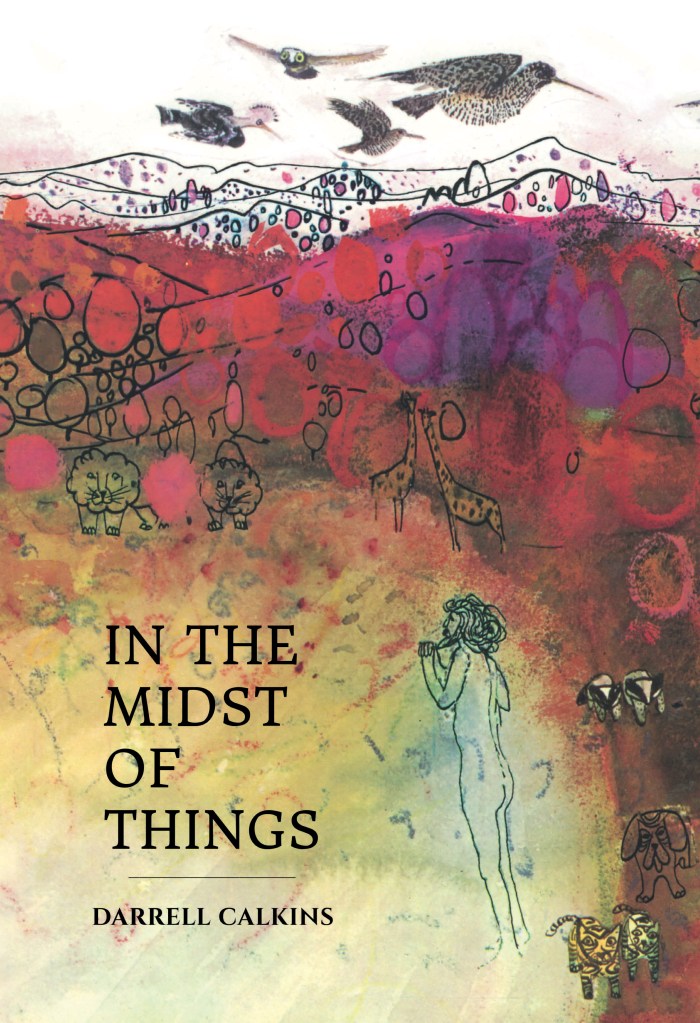
A chapter from Darrell’s most recent book, In the Midst of Things:
How to sustain love in relationships, in one form or another, is certainly the subject I’ve spent the most time and energy studying in my adult life. I believe it warrants it, as everything else in human experience is subsidiary.
One could look at love as a living entity, just as a plant with its need for light, earth, air and water, which sets up a nice analogy to explore.
Light. A higher energy that illuminates.
Relationships that sustain themselves over long periods of time require some form of shared meaning that creates vision and purpose: a reason to be together. One can see this clearly in long-term marriages and friendships that made their way into the history books. The spark of initial awakening, whether that be romantic, sexual, platonically friendly or otherwise, eventually lights up some kind of long-term unique-to-us endeavor. This spirit of engagement, “We’re here to provide something, to accomplish something together,” gives the emotions of love a context of meaning in which to evolve. It connects us to greater powers, transforming personal, private ambitions and desires into something much more inclusive and expansive, very much like photosynthesis. The source of that, the sunlight as it were, is some form of spiritual recognition and acquiescence.
Earth. Practical context, where we place our roots.
Relationship design involves finding ways to make it function well on a daily basis, not just going through the motions. Coming to terms and agreement with practical construction includes prioritizing conscious effort in communication. We learn how to listen, how to be honest and handle consequences, build strength and trust in overcoming differences that can pull in separate directions. We also develop dexterity in adapting to changes beyond our control, inevitable over the course of time. Making a contract of principles and precepts on which we build specific choices, independently and together, requires us to bring vision to the ground and apply it practically, consistently. It also demands a piercing deliberation, and evolving conversation, about all things associated with commitment.
Air. Literally inspiration.
To function well in partnership of any kind requires us to identify and exploit our independent, individual rhythms, passions and rituals that may be different from our partner’s. That includes even a necessary distance between each other, space to breathe. What is independently unique to each individual, if well attended to, generates specific activities and learning that add to the spectrum of shared goods when brought back into the relationship—stories to share, knowledge to convey, questions to engage and accomplishments to celebrate. Successful relationships always require a largess of enthusiastic tolerance for the other’s personal solitude. In our private explorations and regenerative rituals, we find fresh air in the discovery and expression of our own nature. It is in the temporary absence from each other that we also access more acute awareness of value and ensuing appreciation. It’s where we understand in visceral ways the meaning of potential loss, which nourishes our deeper, more mature sensibilities toward respectful kindness. That, in turn, serves to circumvent perhaps the greatest impediment to sustained love: complacency and unchecked self-entitlement.
Water. Stop everything else, walk down to the garden and water the plant.
It never ceases to amaze me how many potentially exceptional relationships diminish simply because no one noticed, or cared enough to notice, that it needed a little water. This is simply generosity. Care enough, be attentive enough, to know what your partner needs as sustenance. A bond that will survive and flourish necessitates prioritizing it enough to offer a presence that no one else can or does. Some of this happens organically, especially early in relationships. But generating generosity on a consistent basis, establishing it as the essential ethic of engagement, is the core of love itself. Whether that evolves into mature devotion— “I do this even when it’s inconvenient because it’s obviously the better thing”—is the single most important factor within our control that will determine a relationship’s lifespan. It isn’t so much the specific acts of sacrifice that display this; it’s the underlying harmonic tone we set in presence, our subtle sense of how to fit and connect and engage. That depth of sincere care, and feeling our way into it with another person, is often as simple as “I am really here.”
In looking at sustaining love, I also want to say that in most relationships, or maybe even all, love remains even if we don’t consciously recognize it or feel it. It’s just that we so often become consumed by our likes—a different thing entirely—and lesser distractions in life. What happens then is the love is lost, although not dead, hibernating in silent, isolated darkness.
If we have the luck to meet again later in life someone whom we loved decades earlier, we can find living roots of that original love. It’s as if the first chapter of that relationship was filled with all the enthusiastic, intuitive willingness to engage each other as I’m describing here, but we just didn’t prioritize it enough or have the (self- and life-) knowledge to pull it off. Then many years later we’re reminded of it again, like a rich communion or conversation with a silent void between the first and last parts.
There is something in recognizing this in advance, propelling our imagination well into the future in the creational moments of a relationship that can give us just that much more conviction to live up to the original calling, and to be more adamant in keeping it alive.
© 2020 Darrell Calkins
 Darrell Calkins